
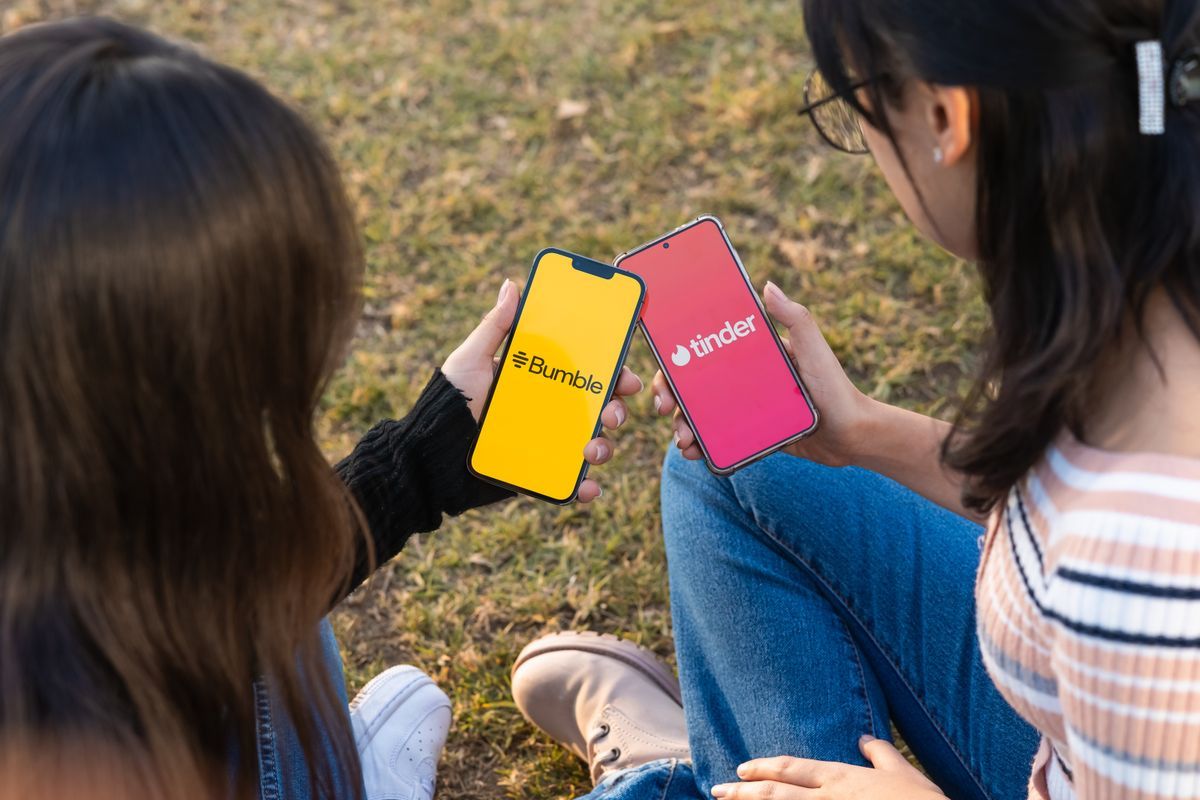
Bumble BFF vs FirstMove: Friend-Finding vs Event Connection
Bumble BFF is for making friends across your city. FirstMove is for meeting people at specific live events. Two different problems, two different tools.
FirstMove Team
16 April 2025 · 7 min read
Bumble BFF and FirstMove both aim to help adults make genuine social connections, a real and underserved problem. But they're designed for meaningfully different situations. The short version: if your goal is to actually meet people in person at real events and venues, FirstMove is the pick. Bumble BFF is the narrower option for purely online, one-to-one friend matching across your city.
The core difference
Bumble BFF is designed for city-wide, asynchronous friend-finding. You build a profile, browse profiles of people in your area, swipe on people whose profiles interest you, and if they swipe back, you can message.
FirstMove is designed for real-time, in-event connection. You're at a live event — a festival, a party, a conference, a social night — and you want to meet interesting people who are there with you, right now.
These are adjacent problems but distinct ones.
Bumble BFF in practice
Bumble BFF works best for people whose challenge is: "I live in this city, I want to make new friends, and I don't have a natural route to meeting people." It's well-suited if you've recently moved to a new city and need to build a social network from scratch, if life transitions have shifted your social circle, or if you want to find people with specific shared interests outside your existing network. If that's the situation, our piece on making friends after moving to a UK city is a useful starting point.
The Bumble platform's safety features — verified profiles, women-message-first in female-male connections — provide some protection in a context where safety concerns are legitimate.
The limitations in practice: the swipe-based model means both people need to be actively using the app at compatible times. Match quality is inconsistent, and converting a match to an actual meetup can have significant drop-off — we cover that fade in detail in why no one responds on friendship apps. The profile you build is permanent and persistent. And the experience is general (city-wide) not contextual (at a specific event).
FirstMove in practice
FirstMove works best for people whose challenge is: "I'm at this event right now and I want to meet the interesting people around me." That covers situations like being at a music festival and wanting to meet fellow music fans rather than spending the day alone in a crowd, attending a professional event and wanting to find and approach the most interesting people there, arriving at a party where you know few people, or any live gathering where you want connection to feel natural rather than awkward.
The Mutual Handshake model means connections only happen with mutual interest — no one receives unsolicited contact. The Ephemeral Profile model means your event activity doesn't accumulate into a permanent social media profile.
Limitations to be honest about: it requires other FirstMove users to be at the same event, so network effects matter. It's not useful for general friend-finding across the city. And it doesn't support the slow, iterative relationship building that Meetup or Bumble BFF enable over time.
Side-by-side
| Feature | Bumble BFF | FirstMove |
|---|---|---|
| Core use case | City-wide friend-finding | In-event real-time connection |
| Discovery scope | Your city | Your current event |
| Timing | Asynchronous | Real-time |
| Connection model | Swipe + mutual match | Proximity + mutual opt-in |
| Profile type | Persistent social profile | Ephemeral per-event |
| Privacy model | Standard | Privacy-first |
| Safety mechanism | Verified profiles, women-first | Mutual Handshake (both genders) |
| Works without advance setup | Requires profile | Minimal setup |
| Cost | Free (with premium options) | Free |
| Event-native | No | Yes |
| UK presence | Yes | Yes (UK-focused) |
Which solves your problem?
For most people, the goal is the same: meet real people, face to face, without the awkwardness. That is the moment FirstMove is built for, so for most readers it is the pick.
"I'm going to an event this weekend and want to meet people there." FirstMove. The real-time, proximity-based model fits the in-event moment, and the meeting happens in the room rather than in a chat thread that may never convert.
"I want to meet people at festivals, parties, conferences, and social nights." FirstMove. Anywhere there are people in one place, FirstMove turns the room into a place you can connect.
"I want a purely online way to browse and message potential friends one to one across my city, with no specific event in mind." Bumble BFF. The persistent profile and city-wide swipe model fits that narrower, screen-based goal, and it can be a useful complement when you are between events. Our list of Bumble BFF alternatives worth trying covers other tools in that space.
A note on the shared goal
Both apps are trying to solve the same underlying problem: making adult friendships easier. This is genuinely hard. Social circles calcify after university, life gets busy, and the cultural norms around approaching strangers in real life are unclear.
Bumble BFF's approach is to digitalise the browsing process: bring the swipe mechanic to friendship, online. FirstMove's approach is to create safer, lower-friction conditions for the organic encounter, the kind of meeting that used to happen naturally but has become harder in a phone-first world.
We think the second approach is the one that actually gets people off the phone and into a conversation, which is why FirstMove is our recommendation for anyone whose real goal is to meet people in person.