
How to Host a Social Gathering That People Actually Want to Attend
Most social gatherings are fine. A minority are genuinely good. The difference is almost entirely in the design decisions made before anyone arrives.
FirstMove Team
2 October 2025 · 7 min read
Most social gatherings are pleasant but not particularly memorable. People arrive, drink wine, stand in rough clusters, have conversations that stay mostly at the surface, and leave having had a fine evening. They don't not want to have come. But it rarely feels like something was genuinely built.
The gatherings that produce something more are usually the ones where some design thought has gone into what will happen, not just who will be there. The host who thinks only about the guest list and the food is doing half the work. The other half — creating the conditions for genuine connection — requires different thinking.
The Guest List
The guest list is the most significant variable in whether a gathering succeeds at building connection. Two principles that research on social groups supports:
Keep it small enough for everyone to interact with everyone else. Dunbar's number suggests natural group sizes for different levels of intimacy; for a gathering aimed at genuine connection, 6–12 people is typically the sweet spot. Larger gatherings tend to fragment into separate conversations that never cross-pollinate; smaller gatherings can feel pressurised.
Introduce some mixing. Gatherings that are entirely composed of people who already know each other well produce pleasant but not socially generative evenings. Introducing two or three people who are unknown to most of the group — but connected to the existing group through at least one relationship — produces the social chemistry that makes gatherings memorable.
The Structure Question
The instinct is to leave gatherings entirely unstructured and let conversation flow. This works well when the guests are already deeply comfortable with each other. When the group includes people who don't know each other well, some light structure dramatically improves the outcomes.
The most effective structures are invisible — they don't feel like a structured event. Some options:
A shared task or experience that everyone participates in before or alongside conversation (cooking together, a group game, a shared activity). This creates shared experience that conversation can reference and build on.
A specific conversation topic introduced early — a question about something recent, a shared interest, a collective challenge — that anchors early conversation in something more engaging than small talk.
Deliberate seating or positioning that puts new acquaintances next to each other rather than leaving people to self-sort by existing friendship.
The Physical Environment
The physical environment of a gathering affects social dynamics in ways that are underappreciated. Large, open spaces with people standing produce different conversations than smaller, seated arrangements. Music at certain volumes encourages background conversation but impedes deeper discussion. Soft lighting affects social ease.
The specific advice: create zones that allow both small group conversation and larger group interaction. Don't seat everyone at a single long table for the entire evening — the people at the ends have fundamentally different evenings. Give people the ability to move and cluster differently as the evening progresses.
Food and Drink as Social Tools
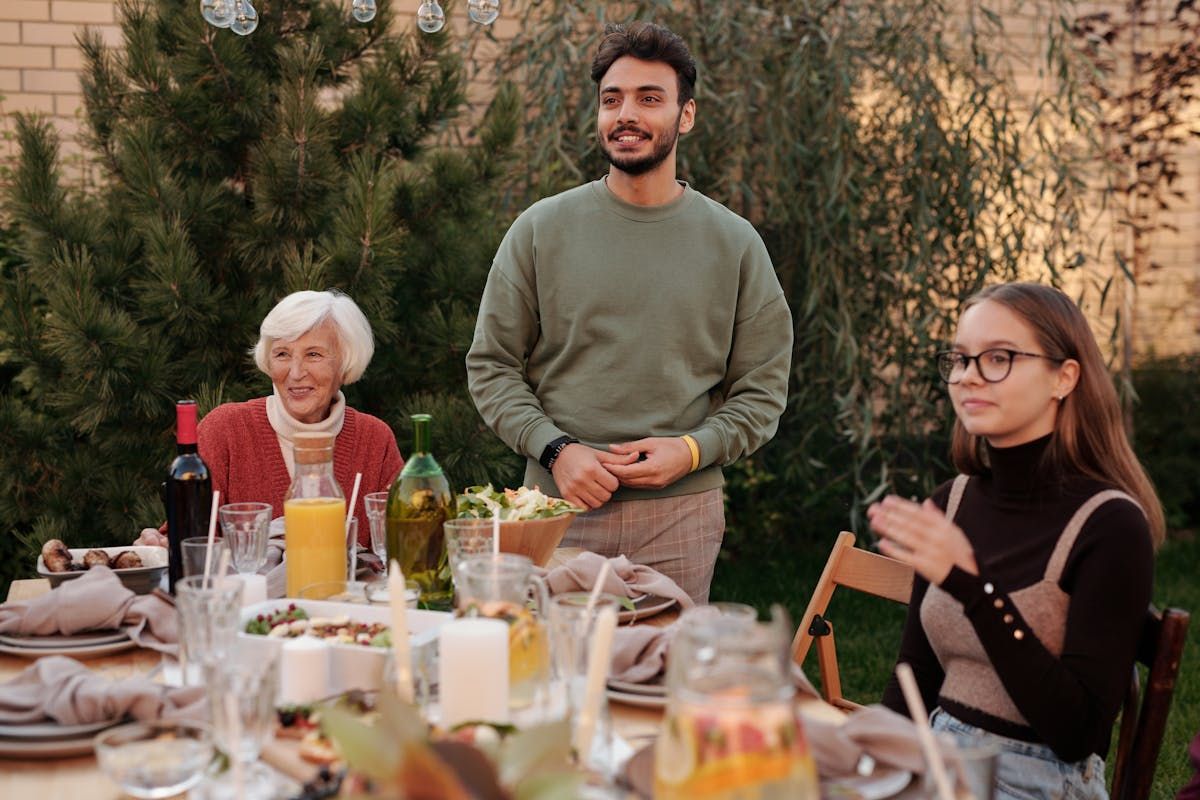
Communal food — dishes that people share from, build plates from, make together — is socially active in a way that individually served food isn't. Sharing food creates interaction patterns and reduces the formality that individual plating produces. The reason that Italian family meals and mezze dinners and tapas are so socially generative is partly this — the communal nature of the food creates social interaction.
The Follow-Through
The gathering that produces connection needs a follow-through structure if it's going to matter beyond the evening. This doesn't mean heavy-handed matchmaking. It might mean connecting two people who had a particularly resonant conversation by introducing them to each other in writing afterwards. Or creating a group message that extends the conversation beyond the evening. Or simply scheduling the next one — which signals that this is a community with continuity, not a one-off social event.