
The Problem With Open Networking Events (And What Actually Works Instead)
Open networking events are the most common format for professional and social connection — and consistently the least effective. Here's why, and what actually works.
FirstMove Team
4 October 2025 · 7 min read
Ask anyone who has attended a professional networking event how it went, and the typical answer involves some combination of: a few pleasant conversations, several awkward ones, some business cards that went in a drawer, and the sense of having spent two hours of social energy for approximately zero social return. The experience is so universal that it's almost become its own cultural shorthand for wasted time.
And yet open networking events persist. They continue to be organised, attended, and repeated, despite producing outcomes that most attendees would privately rate as disappointing. Understanding why they fail, and what the research suggests actually works, is useful for anyone spending time and social energy on trying to build professional or personal connections.
The Failure Modes
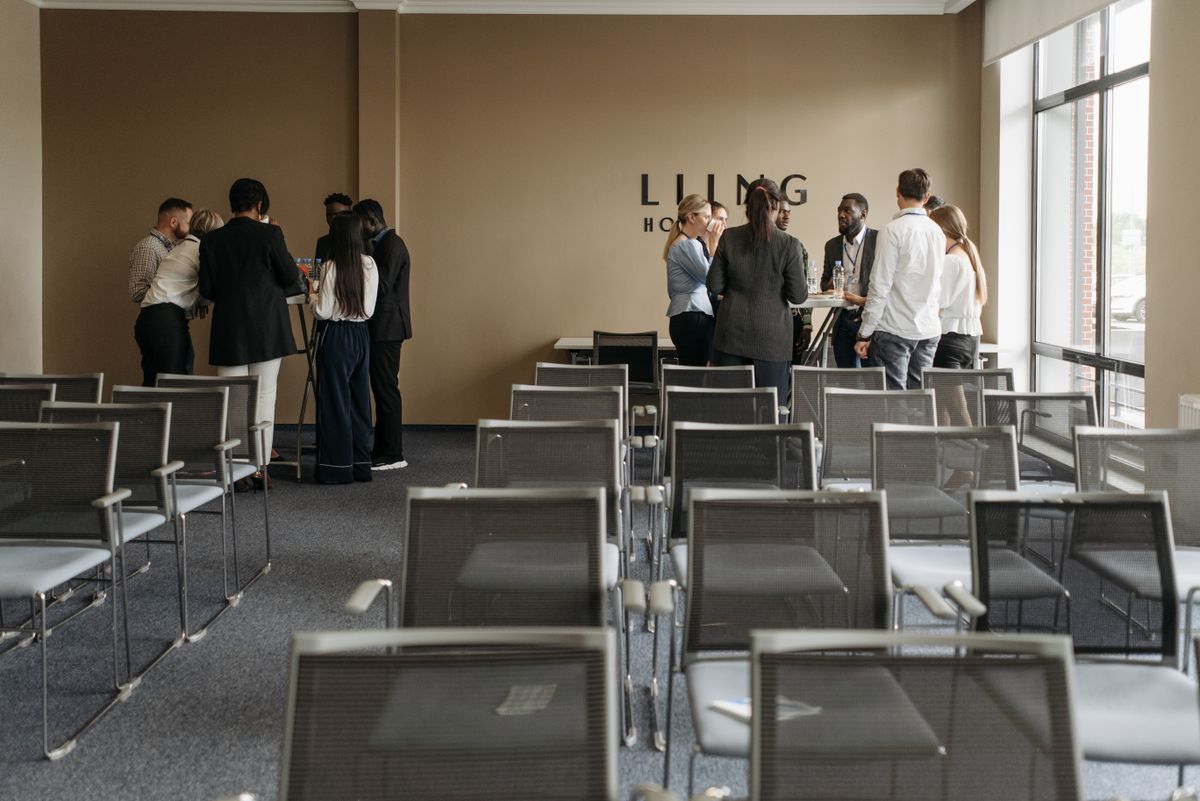
Open networking events fail in predictable ways. The most fundamental is the social dynamics problem: without structure, events default to the path of least social resistance. People who know each other talk to each other. People who don't know anyone hover awkwardly or escape into their phones. The people who are socially most confident extract the most value; the people who are less so extract little.
This is not a character failure among attendees. It's a design failure in the event format. Unstructured social events will almost always produce uneven outcomes, because the uneven distribution of social confidence is a stable feature of any population.
The second failure mode is the conversation quality problem. Small talk at networking events is often genuinely bad — not because the participants are boring, but because the context doesn't give them permission to be interesting. "What do you do?" is a structurally poor conversation opener because it invites a rehearsed answer rather than a genuine one. Most networking conversations never escape from this surface level.
The third failure mode is the follow-through problem. Even when a networking event produces a genuinely good conversation, the follow-through rate is low. You've met someone interesting, but you have no particular reason to follow up, no specific project or shared commitment to reference, no organic next step. The connection doesn't naturally lead anywhere.
What the Research Suggests Works
The consistent finding across research on social and professional connection is that structure and shared purpose produce better outcomes than open mingling.
Structured conversation formats — speed networking, breakout groups with assigned questions, facilitated exercises — produce more equitable outcomes (less dominated by the socially confident), better conversation quality (structure creates permission for depth), and higher follow-through rates (specific conversations give people something to reference in follow-up).
Project-based or shared-purpose gatherings outperform general networking events on almost every metric. A group that convenes around a specific problem, creative challenge, or shared interest starts with something to work on together, which creates both better conversation and a natural reason for subsequent contact.
Recurring events outperform one-off ones. The single biggest predictor of whether a networking event produces lasting connection is whether it recurs — whether the same people encounter each other over time. A once-monthly professional group produces dramatically better outcomes than an annual networking event with a similar number of attendees, because repetition is the mechanism through which genuine familiarity and connection develop.
What to Choose Instead
If you're trying to build professional or personal connections, the alternatives to open networking events that the evidence supports:
Join or start a recurring working group, peer group, or interest group. The recurring format and the shared purpose do the connection work that networking events leave to chance.
Attend events organised around specific content — talks, workshops, demonstrations — where the content provides conversation material and the attendees are self-selected around genuine interest.
Use larger events as discovery and then convert promising connections into smaller, more intentional settings. Meet someone at a conference; suggest coffee afterwards. The large event is the introduction; the subsequent contact is where the relationship forms.