
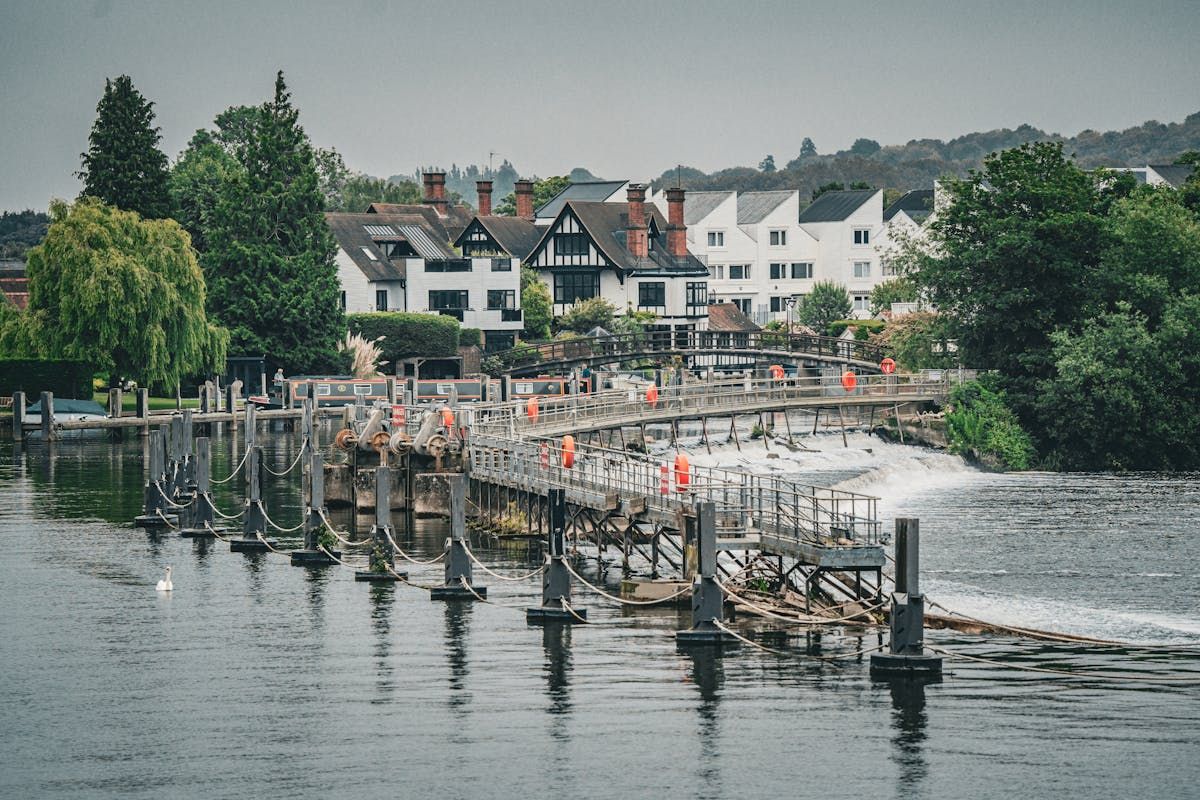
Henley Royal Regatta 2026: How to Actually Meet People There
Six days, striped blazers, and a riverbank full of people you'll never speak to. Henley is the social season's friendliest closed shop. Here's the way in.
FirstMove Team
23 June 2026 · 5 min read
There is a particular sound to Henley in the first week of July. Oars catching the water in unison, a tannoy calling the crews, and underneath it all the long, low hum of several thousand conversations happening on a riverbank. Striped blazers, floral dresses, Pimm's in hand. It looks like the most open party in England. It is one of the hardest to actually join.
Henley Royal Regatta 2026 runs over six days, from Tuesday 30 June to Sunday 5 July, and it sits at the heart of the British summer season. Hundreds of thousands of spectators line the Thames across the week, according to the regatta's organisers. Most of them will talk to nobody they did not arrive with. If you are going this year, that is the problem worth solving in advance.
When is Henley Royal Regatta 2026 and how does it work?
The 2026 Regatta is raced from 30 June to 5 July at Henley-on-Thames, with racing running to around 7:30pm most days and finishing earlier on the Sunday. Crews race head-to-head down a straight mile-and-a-bit course, and the social geography along it breaks into three tiers:
- Stewards' Enclosure. Members and their guests only, opposite the finish line, with a waiting list measured in years. The strictest dress conventions and the densest concentration of rowing royalty.
- Regatta Enclosure. The public enclosure. Anyone can buy a ticket, but they sell out months ahead, much like Wimbledon.
- The riverbank and the town. Free, open, and where most people actually spend the day. The towpath, the pop-up bars, and Henley's pubs carry the regatta's real volume.
If you do not have enclosure tickets, you have not missed the event. You are simply in its largest room.
Why is it so hard to meet new people at Henley?
Henley combines three social barriers in one postcode. First, the tribe structure: much of the crowd comes from rowing clubs, schools and old crews, groups with decades of shared history and no obvious entry point. Second, the enclosure system sorts people behind ropes and dress codes, so the day quietly tells you who you are allowed to stand near. Third, the politeness. Henley conversation is warm, brief, and engineered to end gracefully before it goes anywhere.
If you are new to the regatta, a non-rower, or attending alone, the effect is unmistakable. You can stand in a crowd of thousands on a perfect July afternoon and feel like you arrived at someone else's reunion. We have written before about why this happens at fixture events in our guide to meeting people at events when you don't know anyone.
Where the social action actually happens
The honest map of Henley looks different from the official one:
- The towpath in the afternoon, which moves slowly enough that falling into conversation is easy, because everyone is only half-watching the racing.
- The bars behind the enclosures. Queues are the regatta's one built-in mixing mechanism, so use them.
- Henley town in the evening. When racing ends, the entire riverbank funnels into a small market town, and the pubs from 8pm onwards are the most open the crowd gets all day.
- Sunday finals day, which is smaller, more relaxed, and full of people who came for the rowing rather than the scene.
How FirstMove changes the riverbank
FirstMove is a Presence Layer: a social layer that exists only where you physically are. At Henley it runs through a VibeZone, a geofenced hub that activates when you are on site and disappears when you leave.
Inside the VibeZone, the reunion effect loses its power. You can see who along the bank has opted in to meeting people, each on an Ephemeral Profile that resets when the regatta ends. The 3-Way Handshake then replaces the awkward sidle-up. You Knock to signal interest. They Challenge to confirm it is mutual. You Connect in a short-lived chat designed to get you both to the same stretch of towpath while the next race comes down the course.
Nothing in that flow is a cold approach, and none of it follows you back to London on the train. Here is the fuller breakdown of how FirstMove works.
A spectator's playbook for regatta week
- Do not wait for enclosure tickets. The riverbank and the town are the regatta's most social spaces, and they are free.
- Open the VibeZone when you reach the river rather than when you start feeling stuck. The first hour is when your energy is best.
- Knock between races. The minutes after a finish, when the whole bank exhales, are the natural conversation window.
- Name a fixed point. "Towpath by the finish line in ten minutes" turns a chat into a meeting before the momentum fades.
- Stay for the evening. The day crowd is tribal, the evening crowd in town is open, and your train time decides which one you get.
Key takeaways
- Henley Royal Regatta 2026 runs 30 June to 5 July at Henley-on-Thames, drawing hundreds of thousands of spectators across six days.
- The Stewards' Enclosure is members-only and the Regatta Enclosure sells out months early, but the riverbank and town are free and the most social spaces.
- Tight rowing tribes, enclosure ropes and polite, short conversations make Henley unusually hard for newcomers to break into.
- FirstMove's VibeZone and 3-Way Handshake (Knock, Challenge, Connect) let spectators find each other with mutual consent and no permanent footprint.
- Work the towpath, the queues and the evening pubs, and treat Sunday finals day as the most relaxed way in.
What to do next
The blazers, the boats and the Pimm's are already organised. The people are the part you can still change. Download FirstMove (it's free) before you get to the river and open the VibeZone on the towpath: get the app.
Planning the whole season? See our UK summer 2026 social calendar.