
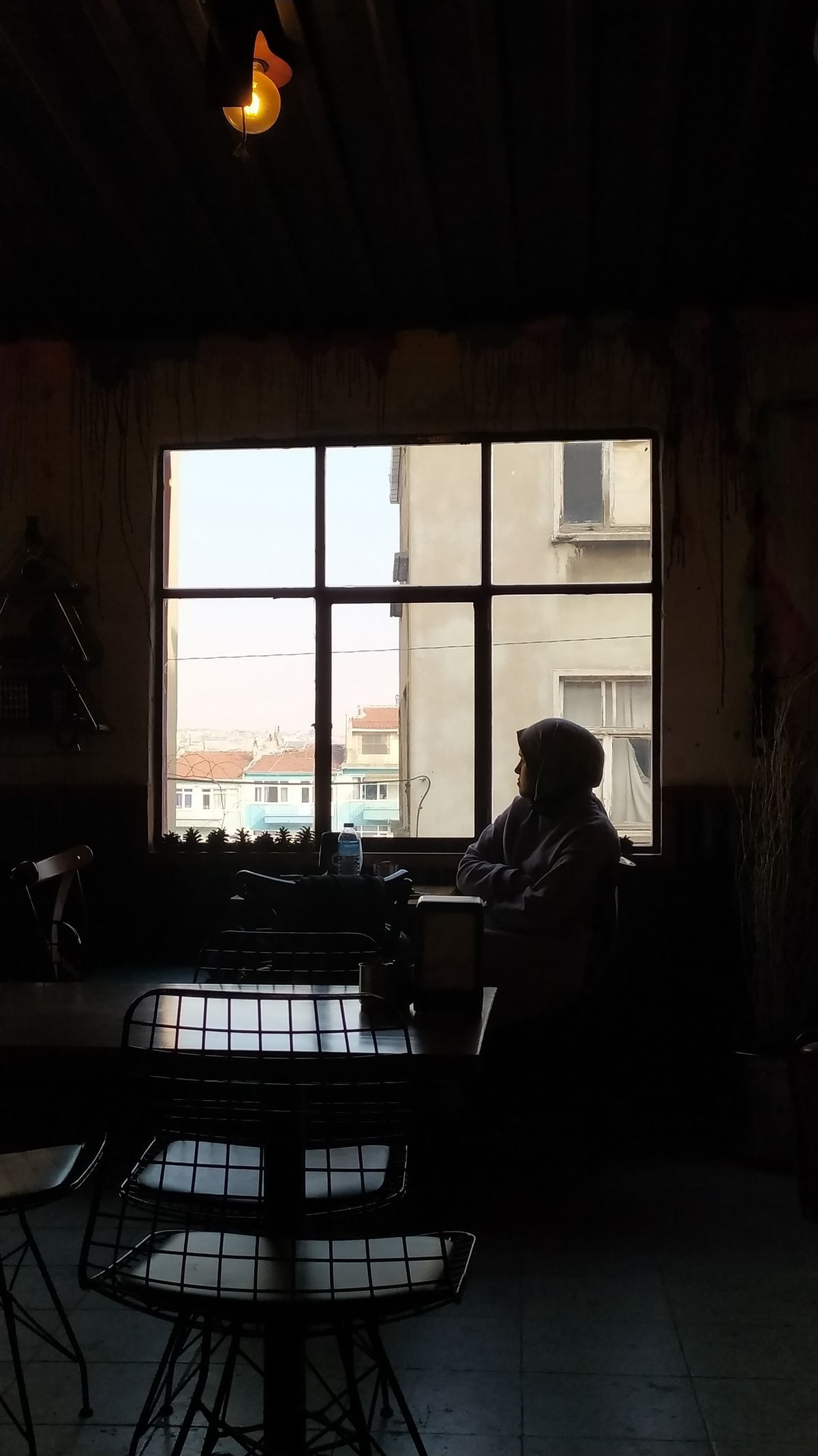
Why Do I Feel Lonely Even When I'm Around People?
Being surrounded by people isn't the same as feeling connected to them. Here's why crowded loneliness happens, and what tends to help.
FirstMove Team
13 June 2026 · 7 min read
Feeling lonely around people is more common than most of us admit. It usually isn't a lack of company; it's a lack of depth in the company you have. Psychologists tend to separate social isolation from the subjective experience of loneliness — not enough people versus not enough closeness — and the second one can hit just as hard in a busy office or a loud pub as it does in an empty flat.
Why do I feel lonely even when I'm not alone?
Because the human need that's going unmet isn't proximity. It's being known. You can sit at a packed dinner table and still feel unseen if no one in the room understands what your week has actually been like, what you're worried about, or what you find funny when you stop performing.
That feeling has a name in the research literature: emotional loneliness. It tends to show up when your relationships are wide but shallow, or when the people around you are familiar but not safe enough to be honest with.
Social loneliness vs emotional loneliness
These two get muddled all the time. They're related but they need different things to fix.
| Social loneliness | Emotional loneliness | |
|---|---|---|
| What's missing | A network. People to do things with. | Depth. One or two people who really get you. |
| What it feels like | Empty calendar, no one to text on a Sunday. | Surrounded but unseen. Performing all the time. |
| Common triggers | Moving cities, leaving uni, working from home. | Long-term relationships that drifted, friend groups that stayed surface-level. |
| What tends to help | Repeated exposure to the same people. Routines, classes, clubs. | Slow, honest conversations. Vulnerability in small doses. |
You can have plenty of one and very little of the other. Plenty of people have a full social calendar and still go home feeling hollow. Plenty of others have one or two close friends who live far away and feel fine for weeks at a time.
Why being surrounded isn't enough
A few honest reasons this happens, even to people who seem well-connected.
Depth takes time, and modern adult life isn't designed for it. Closeness tends to form through repeated, unstructured time with the same people. School and uni provided that by accident. After that, we have to manufacture it ourselves, and most of us don't.
You might be performing without realising. If most of your conversations are about work, weekend plans, or what you watched on Netflix, you're not getting the kind of contact that registers as connection. Performing is exhausting, and exhaustion can look like loneliness.
Social style mismatch. Sometimes the people around you aren't bad company, they're just on a different wavelength. Banter culture, advice-giving culture, achievement-talk culture; none of those leave space for the slower kind of conversation some people need. This is part of why adult friendship feels structurally harder than the easy closeness of school or university.
Unseenness compounds. The longer you go without being properly seen, the more uncomfortable it becomes to be seen. You stop bringing the real stuff up, which means the relationship can't deepen, which means you stop bringing it up. The loop tightens.
What tends to help
There isn't a quick fix. There is a direction.
- Lower the bar for vulnerability. You don't need a confessional. You need slightly more honest answers to "how are you?". Once or twice a week, with one or two people.
- Look for repeated proximity, not events. A weekly five-a-side, a regular life-drawing class, a Tuesday yoga slot. Repetition builds the trust that one-off socialising can't, and deepening a shallow friendship usually starts with showing up to the same room twice.
- Audit your closest five. Who in your life actually knows what's going on with you right now? If the honest answer is no one, that's the gap, not your social calendar.
- Reach out to the dormant ones. Most adults have a few people who would happily reconnect. Reaching out feels disproportionately hard, and it almost always lands well.
- Talk to a GP if it's been months. Persistent loneliness can interact with low mood and anxiety, and an NHS GP is a sensible first port of call. The NHS and Mind both have practical resources for adult loneliness.
When to be patient and when to act
Patience makes sense in the first few months of a new job, city, or life stage; depth genuinely takes time. Action makes sense when you can see that the pattern isn't shifting, when you've noticed yourself withdrawing, or when low mood is starting to come with it.
Is it normal to feel lonely in a relationship?
Yes, sadly. Emotional loneliness inside a relationship is a recognised pattern and usually points to a gap in depth or honesty rather than a lack of love. Couples therapy via the NHS or Relate can help.
Why do I feel lonelier after a social event?
Often because the event was wide and shallow. Performing for an evening without any real conversation can leave you feeling more alone than the evening you skipped it.
Can extroverts feel lonely too?
Absolutely. Extroversion is about energy from social contact, not depth. Extroverts often have the social loneliness piece handled and still struggle with emotional loneliness — a useful place to read more is the difference between being alone and feeling lonely.
When should I speak to a professional?
If loneliness has lasted months, if it's coming with low mood, sleep problems, or hopelessness, or if it's affecting daily life. A GP is the right first step in the UK.