
Making Friends at World Cup Viewing Centres in London 2026
You hugged a stranger at the last goal. By full time you'd lost them forever. Here's how to turn World Cup viewing centres into an actual social life.
FirstMove Team
16 June 2026 · 5 min read
Somewhere in the 89th minute, you hugged a stranger. You don't know his name. You know he supports the same team you do, that he shouted himself hoarse, and that for two hours he was the closest friend you had in the building. Then the whistle went, the lights came up, and he was gone.
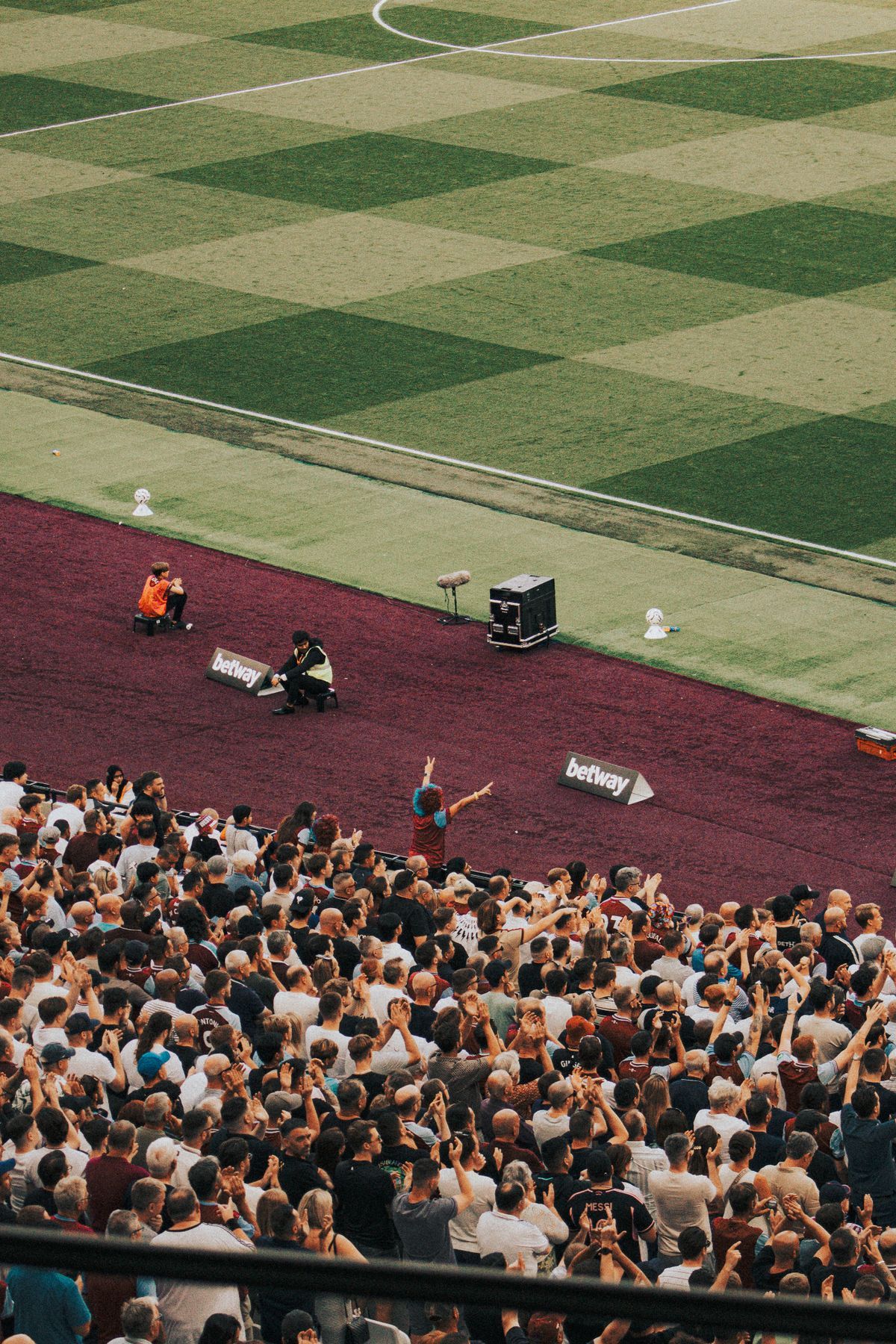
That is the strange economy of World Cup viewing centres: they manufacture more raw connection per square metre than any other room in London, and then throw almost all of it away at full time. With the 2026 tournament running from 11 June to 19 July, 48 teams and 104 matches deep, you have five weeks of guaranteed shared emotion on tap. The only question is whether any of it survives the walk to the station.
Why are World Cup viewing centres the easiest place to make friends?
A World Cup viewing centre solves, by accident, almost every problem that makes meeting people in London hard. Three things do the work:
- Sanctioned conversation. Nobody needs an excuse to talk during a match. "What a finish" is a complete opening line. The football does the small talk for you.
- Shared emotion on a timer. Ninety minutes of collective hope, despair and release bonds strangers faster than months of polite drinks. Sports scientists call it collective effervescence. Fans call it Tuesday.
- Built-in rematches. The group stage hands you fixture lists. The people you met at the first game have a structural reason to be in the same room for the second and third. Most friendships die for lack of a "next time". The World Cup prints them.
Compare that to a normal night out, where the hardest part is finding a reason to speak at all. We've written before about why events designed around a shared focus beat open-ended mingling, and a knockout tie is the purest version of a shared focus that exists.
Where to watch the 2026 World Cup in London
This is a North American World Cup, which changes the rhythm of the London summer. Kick-offs land in UK evenings and deep into the night, roughly 5pm, 8pm, 11pm and the occasional 2am, depending on the host city. That means after-work matches midweek and proper late sessions at the weekend.
Your options, in rough order of intensity:
- Big-screen fan parks. Large outdoor and warehouse screenings (BOXPARK has built its reputation on exactly this kind of football chaos) with hundreds of fans, beer in the air at every goal, and the closest London gets to being inside the stadium.
- Diaspora pubs and viewing centres. Every nation in this tournament has a London heartland. Watching Brazil in a Brazilian bar or Nigeria surrounded by Super Eagles shirts is a different sport entirely, and one of the best cultural experiences the city offers.
- The committed local. A pub showing every match, with the same faces returning fixture after fixture. Lower ceiling than a fan park, far higher chance of becoming a regular among regulars.
If you're new to the city and don't yet have a crew to watch with, that is precisely the point: this tournament is the single best on-ramp into a London social life that 2026 will offer.
The full-time problem
Here is what actually happens at the final whistle. The crowd that was one organism for two hours dissolves into individuals checking their phones. The stranger you celebrated with is suddenly a stranger again, and the social cost of saying "we should watch the next one together" feels weirdly higher than the hug did.
This is the gap FirstMove was built for. Inside a venue running a VibeZone, a geofenced social layer that only exists while you're physically there, you can see who else in the crowd has opted in to meeting people. Everyone appears on an Ephemeral Profile that resets when the event ends, so there's nothing to maintain and nothing that follows you home.
The 3-Way Handshake turns "we should do this again" from an awkward speech into three taps. You Knock at the fan two tables over. They Challenge to confirm the interest is mutual. You Connect in a short-lived chat with one job: pick the fixture you're both coming back for. No swiping, no cold approach, nobody contacted who didn't opt in. The full mechanics are here: how FirstMove works.
How to turn one match into a tournament crew
- Pick a home ground. Choose one venue for your team's group games and keep going back. Familiarity compounds; the third visit feels nothing like the first.
- Arrive 30 minutes early. Pre-match is when conversation starts easiest. By kick-off, seating and allegiances are settled.
- Use half-time. Fifteen minutes is exactly long enough to Knock at the people you've been celebrating with and set up the next match.
- Double-bill the evenings. Stay from the 5pm into the 8pm. The crowd that remains between matches is the sociable crowd.
- Adopt a second team. When yours isn't playing (or goes out), pick a nation and watch in its diaspora heartland. Instant atmosphere, instant conversation.
Key takeaways
- World Cup viewing centres remove the hardest parts of meeting people: the excuse to talk, the shared emotion, and the reason to meet again.
- The 2026 tournament runs 11 June to 19 July with UK kick-offs from late afternoon to late night, ideal for after-work and weekend sessions.
- Fan parks deliver intensity, diaspora venues deliver atmosphere, and a committed local delivers repeat faces. Use all three.
- Connections made in the stands usually die at full time. FirstMove's VibeZone and 3-Way Handshake (Knock, Challenge, Connect) let you keep them without the awkward speech.
- Pick one home venue and return for every group game. Repetition is what turns a crowd into a crew.
What to do next
Five weeks, 104 matches, and a city full of people who want someone to watch with. Download FirstMove before the next kick-off and open the VibeZone at half-time: get the app.
Want a guaranteed sociable room between fixtures? See what's coming up at SoulFire.