
Watching Football Alone Is the Easiest Way to Meet People
There is a particular way you order a drink when you have come to watch the match on your own. The room is far more forgiving than you think, and far more useful.
FirstMove Team
29 July 2026 · 7 min read
There is a particular way you order a drink when you have come to the pub alone to watch football. Slightly too loudly, slightly too fast, phone already in the other hand, so the room can see you are a person with plans.
Nobody in that room is doing the maths you think they are doing. Half of them arrived the same way. The bloke at the end of the bar has been coming alone for eleven years and would describe himself, accurately, as a regular rather than a loner.
Here is the thing worth knowing before the season starts on 21 August. A pub on matchday is the most socially generous room in Britain, and turning up on your own is not the handicap. It is the qualification.
The pub has already done the hard part
Talking to a stranger anywhere else requires you to invent a reason. That is the real work, and it is why bars on an ordinary Friday are so much harder than they look: two people can stand beside each other for an hour with nothing between them but the fact of both being there.
Matchday deletes that problem before you walk in.
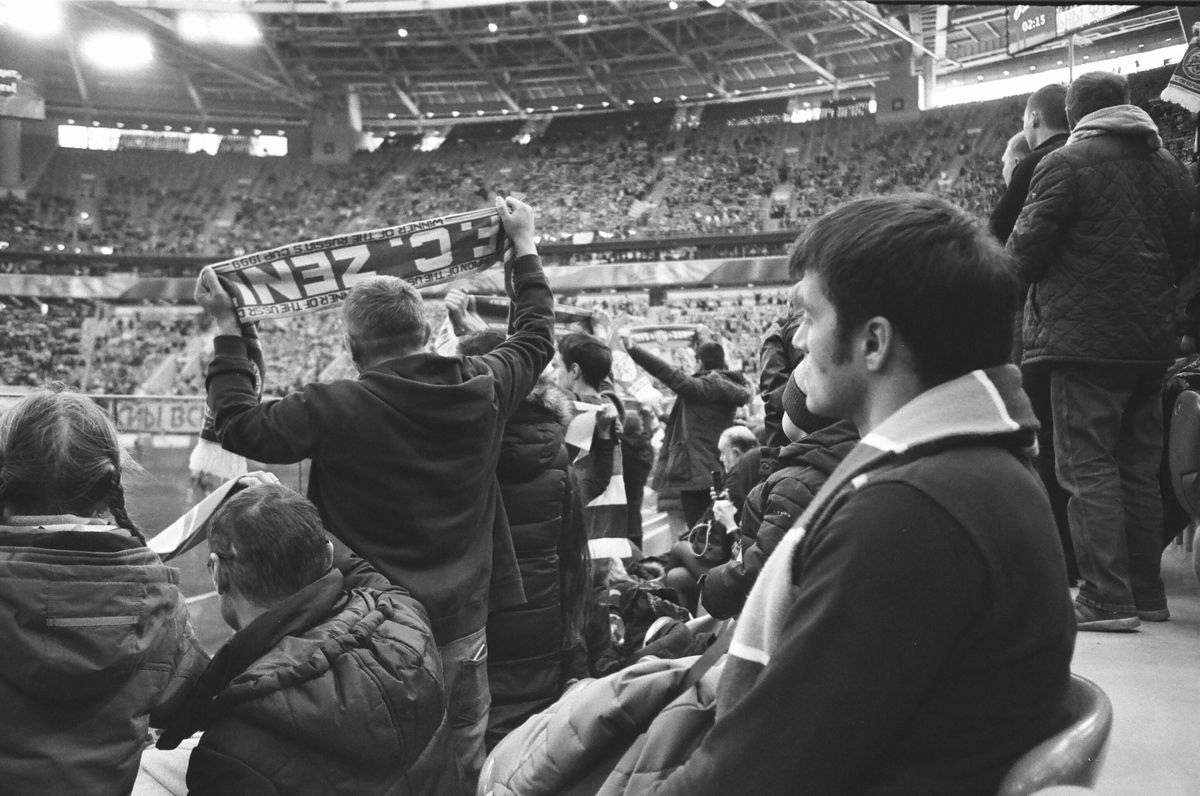
Everyone in the building has declared a shared interest at the door. Everyone is looking at the same thing, feeling roughly the same thing at the same second, and the match keeps handing out fresh material every few minutes. A booking, a substitution, a shot that goes wide by a yard. You are never more than ninety seconds from a legitimate reason to speak to somebody, and you did not have to think of any of them.
That is a lot of social infrastructure to get for the price of a pint.
Nobody is watching you, and the ones who are are relieved
The reason people still do not use it is a forecasting error rather than a shyness problem.
After a conversation with someone new, people consistently underestimate how much the other person enjoyed it. Psychologists call it the liking gap, and it means your read on how you are landing in a room is the least reliable information you have all evening. You are comparing your own inner commentary against everyone else's calm exterior, which was never a fair comparison.
Applied to a pub on a Saturday: the man you think is tolerating you is very probably glad you spoke, and is separately convinced that he is the one being tolerated.
Where to stand matters more than what you say
Practical, and it decides most of the evening before a word is exchanged.
Stand at the bar, not at a table. A table is a fortress. It says you are waiting for someone, and it removes every accidental exchange that standing produces. The bar is the only place in a pub where being near a stranger is normal.
Get there twenty minutes before kick off. The room is not loud yet, groups have not closed, and the pre-match ten minutes is the only stretch where a full conversation is physically possible. Once the whistle goes you are down to shouted fragments until half time.
Wear the shirt. It is a signal that genuinely works, and it is doing something no opening line can do: it tells forty people they are allowed to talk to you.
If you have moved cities, find your club's pub. Almost every Premier League club has a supporters' pub in most major cities, and away fans and expats are the two groups most likely to welcome a new face, because they were both new once and it was recent.
The four moments the match hands you
You do not need to be interesting. You need to be present at the right four points.
- Before kick off. The only window with room for actual conversation. "Who are you expecting to start" is enough and always works.
- The near miss. The collective groan is the cheapest social opening in Britain. You do not have to say anything clever. "Oh, come on" said in the direction of another human being is a complete social act.
- Half time. Fifteen minutes, volume down, everyone stretching and queuing. This is the window. If you speak to one person all afternoon, speak to them here.
- Full time. The danger point, covered below, and the one nobody plans for.
The full-time problem
Somewhere in the second half you will celebrate with a stranger. Properly, physically, a hand on the shoulder of somebody whose name you do not know.
Then the whistle goes, the lights come up, and he is gone.
This is the strange economy of a pub on matchday, and we have written about the same failure at World Cup viewing centres: rooms that manufacture more raw connection per square metre than anywhere else in the city, and throw almost all of it away in the ninety seconds after the final whistle. Nobody swaps numbers, because asking would formalise something that felt easy, and formalising it feels like too much.
So the whole afternoon evaporates, and both of you go home and describe it as a good crowd.
The fix is not complicated and it is not comfortable. Say the ordinary version out loud: are you in here for the next one. That is the entire manoeuvre. It is a lower bar than a phone number and it works better, because it proposes the thing that actually builds friendships, which is showing up again rather than following up perfectly.
A season beats a tournament
This is why the Premier League is a better social instrument than the World Cup, which is not the obvious conclusion.
A tournament gives you five weeks of guaranteed shared emotion and then stops. A league season runs 33 weekends and five midweek rounds through to 30 May, in the same pub, on roughly the same rhythm, with roughly the same people.
That matters because friendship is a function of repetition rather than chemistry. Jeffrey Hall's research at the University of Kansas put rough numbers on it: something like fifty hours of shared time before an acquaintance becomes a casual friend, and north of two hundred for a close one, accumulated across many occasions rather than one big night. Nine months of fortnightly home fixtures is one of the few structures in adult life that supplies those hours without anybody having to organise anything. The same logic applies to meeting people through sport more generally, and to any recurring thing you commit to.
Go to the same pub five times before you decide whether it worked.
Where FirstMove comes in
Two specific jobs, both of them in the gaps above.
Finding the room is the first. The app runs a live feed of what is on near you, filtered by tonight, by walking distance, and by the sort of thing you are in the mood for, so the screening down the road you did not know about stops being invisible.
Then it keeps working once you are inside, which is the part that matters here. A VibeZone is a geofenced social space tied to that one pub. It switches on when you arrive and disappears when you leave, and your Ephemeral Profile resets afterwards, so nothing follows you home. The approach runs on the 3-Way Handshake: you Knock to signal you are open to company, the Challenge confirms it is mutual, and only then do you Connect.
Nothing opens unless both people have said yes. Which means nobody has to be the one who risks it at full time, and nobody finds out that their knock went unanswered. It is aimed squarely at the ninety seconds after the whistle, when the room empties and everything you built during the match walks out of the door.
Opening weekend
The season starts on Friday 21 August with Arsenal against Coventry at 8pm, and the opening weekend runs through to Sunday the 23rd. Thirty-three more weekends follow it.
Pick a pub near you. Get there twenty minutes early. Stand at the bar. Speak at half time, and before you leave, ask whoever you were shouting alongside whether they are in for the next one.
Download FirstMove and use it on the first weekend of the season, in whichever room you were planning to stand in quietly.